Our story
A Sunday habit thatturned into a kitchen.
Mama Gia's African Mandazis started with one tray carried across a driveway in Tucker, Georgia, and it still runs on the same rule: cook the amount you can hand over warm.
The origin moment was a Sunday in 2019. Consolata had fried a double batch of mandazis for her own family, more than the house could finish, and carried the extra tray across the driveway to a neighbor whose kids had been circling the smell all afternoon. That tray came back empty within the hour, along with a request for the following Sunday and a twenty-dollar bill she tried to refuse. The next weekend there were three houses. By the end of that autumn there was a list, a spiral notebook, and a standing argument about whether the kitchen table counted as a business.
Mandazi is not a novelty item in East Africa. It is the pastry that sits next to tea in the morning, the thing handed to a child on the way out the door, the food that shows up when someone visits without warning. Consolata grew up with the dough recipe in her hands rather than on paper: flour, coconut milk, cardamom, sugar, and a proof time judged by touch. When she moved to Georgia, the version she could buy nearby was either not available at all or a frozen approximation sold in a bag. So she kept making her own, and then she kept making other people's.
Turning that into Mama Gia's African Mandazis meant answering one question honestly: how much can one cook produce in a morning without the food getting worse? The answer set the whole shape of the business. We fry three days a week, on Wednesday, Friday and Sunday. Each of those days carries a fixed batch size. When the batch fills, ordering closes and the next day opens. Nobody at Mama Gia's African Mandazis wakes up wondering whether they can push out one more tray, because the tray count was decided before the orders came in.
We refuse to mass-produce, and we refuse to freeze dough. Both refusals cost us money, and we make them anyway. Freezing dough is how a small kitchen scales: mix once, hold stock, fry to order across seven days, take orders every day of the week. It also changes the crumb. A frozen-then-fried mandazi is denser at the center and leathery at the crust, and a samosa built from held pastry sweats inside the box on the drive over. Mass production would fix the ceiling on our volume and break the only thing customers actually pay us for.
The same logic set the delivery radius. Ten miles from Tucker is not a marketing boundary, it is the distance we can cover in a single loop while the boxes are still warm. It covers Stone Mountain, Clarkston, Northlake, Lilburn and most of north Decatur. People outside it ask us to stretch, and we say no and offer pickup instead, because the Fresh-or-Free guarantee only means something if we never take an order we cannot deliver hot.
What has grown instead of the radius is the work inside it. We cater block parties, church halls, baby showers and office mornings. We know which streets order on Wednesday and which wait for Sunday. Consolata still folds every samosa by hand, still writes the batch numbers in a notebook before they go into the order system, and still reads the contact form herself. That is not a charming detail we kept for the website. It is the operating model, and it is why the food tastes the way it does.
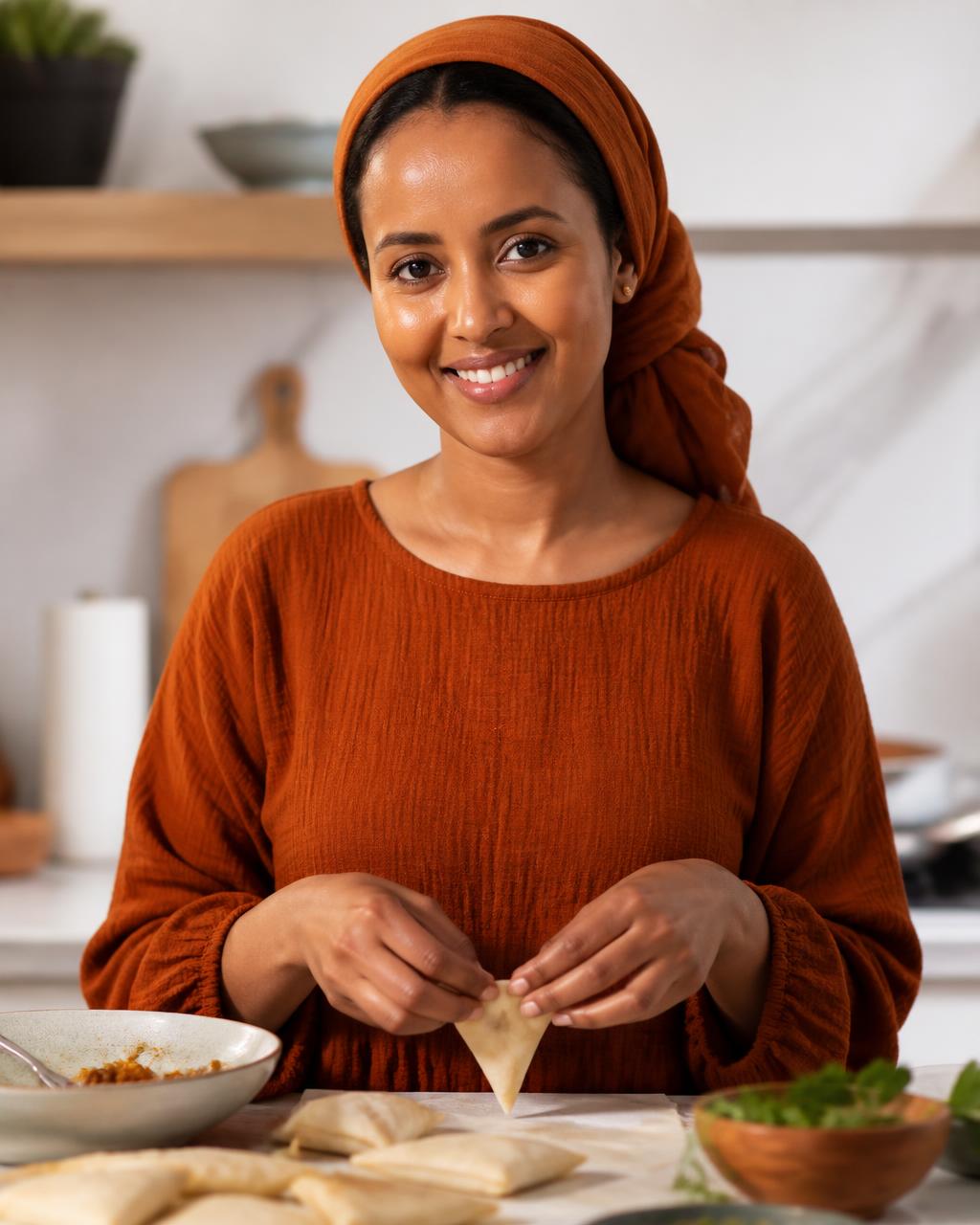
The rules we do not bend
- Three fry days a week: Wednesday, Friday and Sunday.
- No frozen dough and no par-frying, at any volume.
- A ten-mile delivery radius measured by driving distance.
- Fresh-or-Free: a cold box is a full refund, food kept.
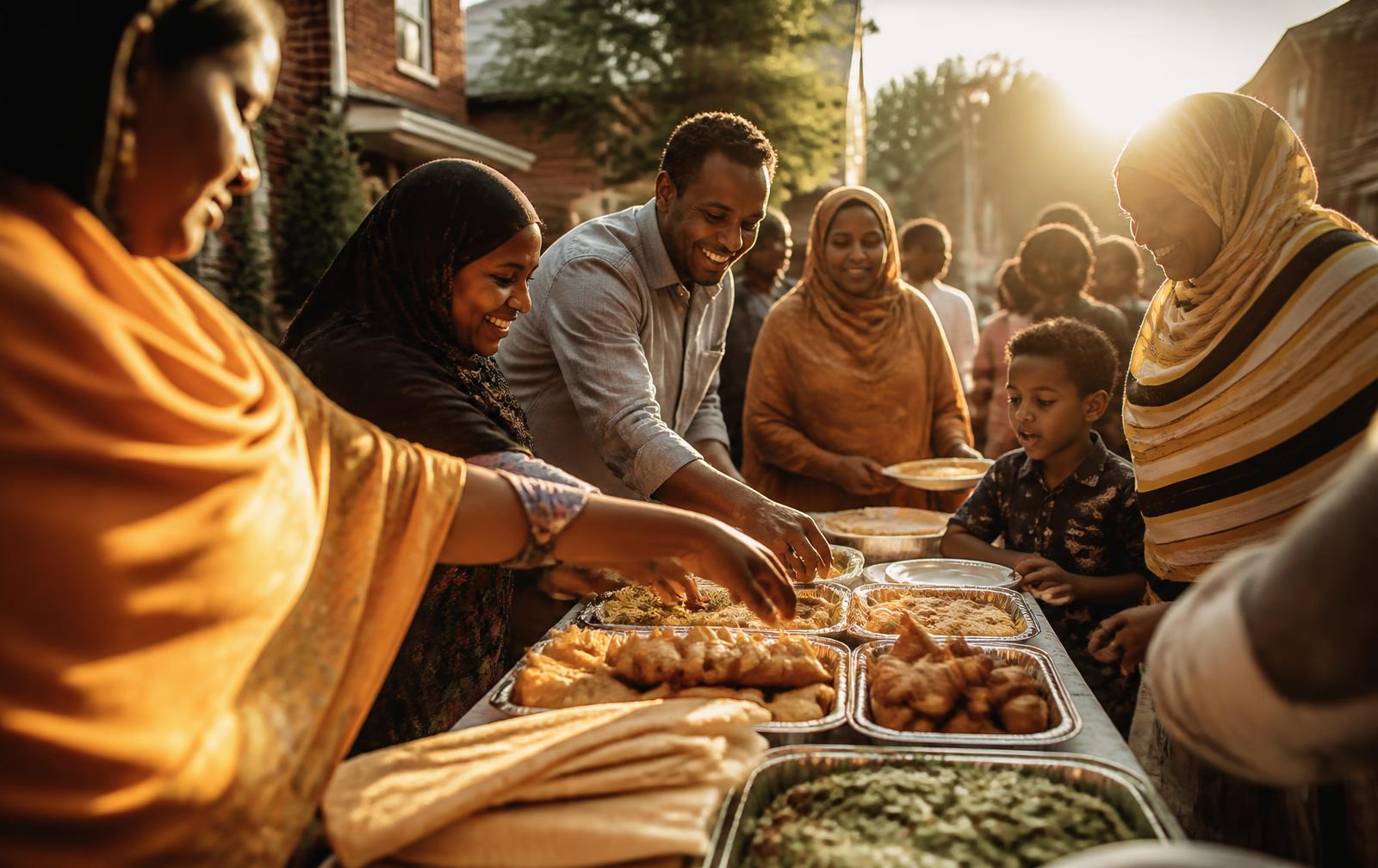
Taste the reason we kept the kitchen small
The Family Box is ten mandazis, six samosas and two large chipettes for $25, fried the morning it reaches you.